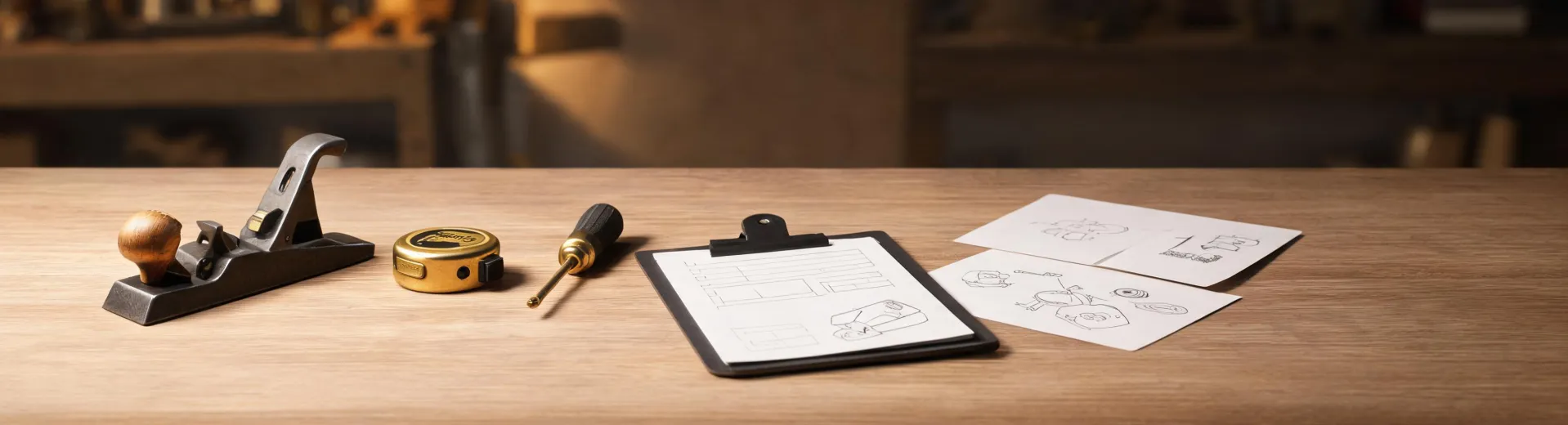
I'm a quality and brand compliance manager at an industrial supply distributor. I review every hand tool SKU before it goes into a customer-facing catalog—roughly 240 items a quarter. In our Q1 2025 quality audit, I rejected about 18% of first deliveries because the tool didn't match the spec sheet. Not because the price was wrong. Because the specs were.
Most B2B buyers think their hand tool problem is price. Or warranty. They compare lifetime warranty hand tools, scan a stanley scrd dyna grip screwdriver set on a quote, and pick the lowest number. I get it. I used to do the same thing.
The Surface Problem: Everyone's Shopping on Price and Warranty
Look, unit price matters. It always will. But a warranty isn't a performance guarantee. A limited lifetime warranty usually covers manufacturing defects, not misuse, wear, or the wrong tool for the job. If you're comparing lifetime warranty hand tools, read the exclusions first. That's the part nobody puts in the spreadsheet.
In my first year, I made the classic specification error: I assumed 'standard' meant the same thing to every vendor. Cost me a $600 redo on a small order. That was cheap tuition. A few years later, the same mistake on a larger run cost us $22,000 and delayed a customer launch by three weeks.
I went back and forth between two suppliers for two weeks. One offered a lower unit price. The other offered batch-to-batch consistency. I chose consistency because the project was too visible to risk. That decision felt slow at the time. It wasn't. It was the fastest way to avoid a redo.
The Deeper Issue: Your Tool Spec Is Probably a Copy-Paste
Here's the thing: most tool failures I see don't start on the jobsite. They start in the spec sheet. A PO that says 'Stanley screwdriver set' or 'chipping hammer' is not a spec. It's a wish.
Take a chipping hammer. The difference between a tool that survives a week and one that quits after a shift is usually not the brand name. It's the heat treatment, the handle material, the eye size, the balance. If your spec doesn't call out those details, you're letting the vendor decide. Some vendors will get it right. Some won't. More often than not, you won't know which is which until the tool is in someone's hands.
Same with a stanley scrd dyna grip screwdriver set. The catalog number matters. Tip type matters. Hardness matters. ANSI/ASME B107.600 covers performance and marking requirements for screwdrivers, but it doesn't fill in your PO. You have to do that.
And yes, there's brand noise. If you search stanley home products, you might land on home-party or drinkware results. That's not the same as Stanley professional hand tools. It's not a knock on anyone's choice. It's just a different duty cycle. B2B buyers need the industrial line, with traceable specs and consistent replacement stock.
The frustrating part: the same issues recur despite clear communication. You'd think written specs would prevent misunderstandings. But interpretation varies wildly. One vendor's 'heavy-duty' is another vendor's 'light commercial.' That's not a language problem. It's a documentation problem.
What It Costs When Specs Drift
In 2024, we received a batch of 1,200 screwdriver sets where the tips were visibly soft. We tested them against our incoming quality protocol. They failed. The vendor claimed it was 'within industry standard.' We rejected the batch. They redid it at their cost, but we lost three weeks. The customer didn't care who paid for the redo. They cared that their launch slipped.
A chipping hammer failure is worse. I've seen a handle break after roughly 80 cycles on a concrete patch job. Nobody got hurt that time. But it stopped the crew, triggered an incident report, and opened an audit question. OSHA 29 CFR 1910.242 requires employers to ensure hand and power tools are in safe condition. A tool that fails early isn't just a replacement cost. It's a compliance exposure.
Efficiency is the hidden victim. Every hour a crew waits for the right tool is an hour you're paying for without progress. When I implemented our verification protocol in 2022, we cut incoming inspection turnaround from five days to two. The automated checklists eliminated most of the data entry errors we used to have. That didn't just save administrative time. It meant crews got verified tools faster.
And if someone ever asks how to open door lock if key is lost without key, please don't hand them a chipping hammer. That's how you turn a lockout into a property damage claim. In a commercial facility, call a locksmith or facility security. Verify ownership. Follow lockout/tagout procedures where they apply. The right answer is usually boring. Boring is good.
What Actually Works: A Short List
You don't need a 40-page manual. You need a repeatable process.
- Write real specs. Model number, material, hardness, finish, handle type, and packaging. If it's not written, it's optional.
- Verify first articles. Test one batch before you release the PO. Measure against the spec, not against a memory.
- Standardize across sites. One stanley scrd dyna grip screwdriver set spec should mean the same thing in Ohio, Texas, and Ontario.
- Track rejection rates. If a vendor's first-delivery reject rate is above 10%, that's not a price advantage. It's a hidden cost.
- Read the warranty. Under the Magnuson-Moss Warranty Act, written warranties have to disclose terms and exclusions. Use that. Don't assume 'lifetime' means 'no questions asked.'
For high-use lines, brands like Stanley have a place because they cover everything from a single screwdriver to a full tool chest. The FATMAX professional line and Comfort Grip designs are examples of how ergonomics and consistency matter on repetitive tasks. But no brand replaces your spec. The brand is a starting point, not the whole plan.
Efficiency is competitiveness. A tool that shows up right, every time, is cheaper than the one that doesn't. That's the whole argument. Simple.

Leila Farzan
Leila Farzan is an independent welding, abrasives, and cutting accessories analyst covering welders, electrodes, wire, grinding wheels, flap discs, cutting discs, drill bits, saw blades, hole saws, and router bits. She references ISO 525 abrasive-product dimensions and ISO 9606-1 welding qualification concepts while examining wheel speed, grit, bond, electrode class, duty cycle, kerf, tooth geometry, and material compatibility. Her guides help fabricators choose consumables, control process risk, and compare cut or weld quality.